i'm a software engineer based in the philippines, driven by curiosity and whatever i find interesting. i learn fast with the caveat of goldfish memory (which i call my context lol) and i'm usually self-motivated that i forget to eat.
this is not like other portfolios. feel free to have a look around and explore what makes me, me.
drag cork to move. drag notes to rearrange. use +/− or pinch-wheel to zoom. click one to open.
↘
recruiter?
(follow the red line) →
one giant active pile
scattered screenshots dozens of windows half-finished checklists constant switching
organized by gravity, not category.
genuinely alive
this websiteatlasweavemayspaceaiproxyorchestratorweppi
this website + ai stuff. open this week.
⌘⇧4
what survives in screenshots
system maps. ui splinters. crash dialogs. blunt debugging. cat memes.
saved mid-understanding, not after everything looks tidy.
~/mayi enjoy writing code. if ai solves every problem, what's left?_
i hate spinners.
same circle. over and over.
less interested in whether it's good—
how does it work?
noiseshape
diffusion models
watching a photo develop.
⋈
“i come in peace”
— jaimehing
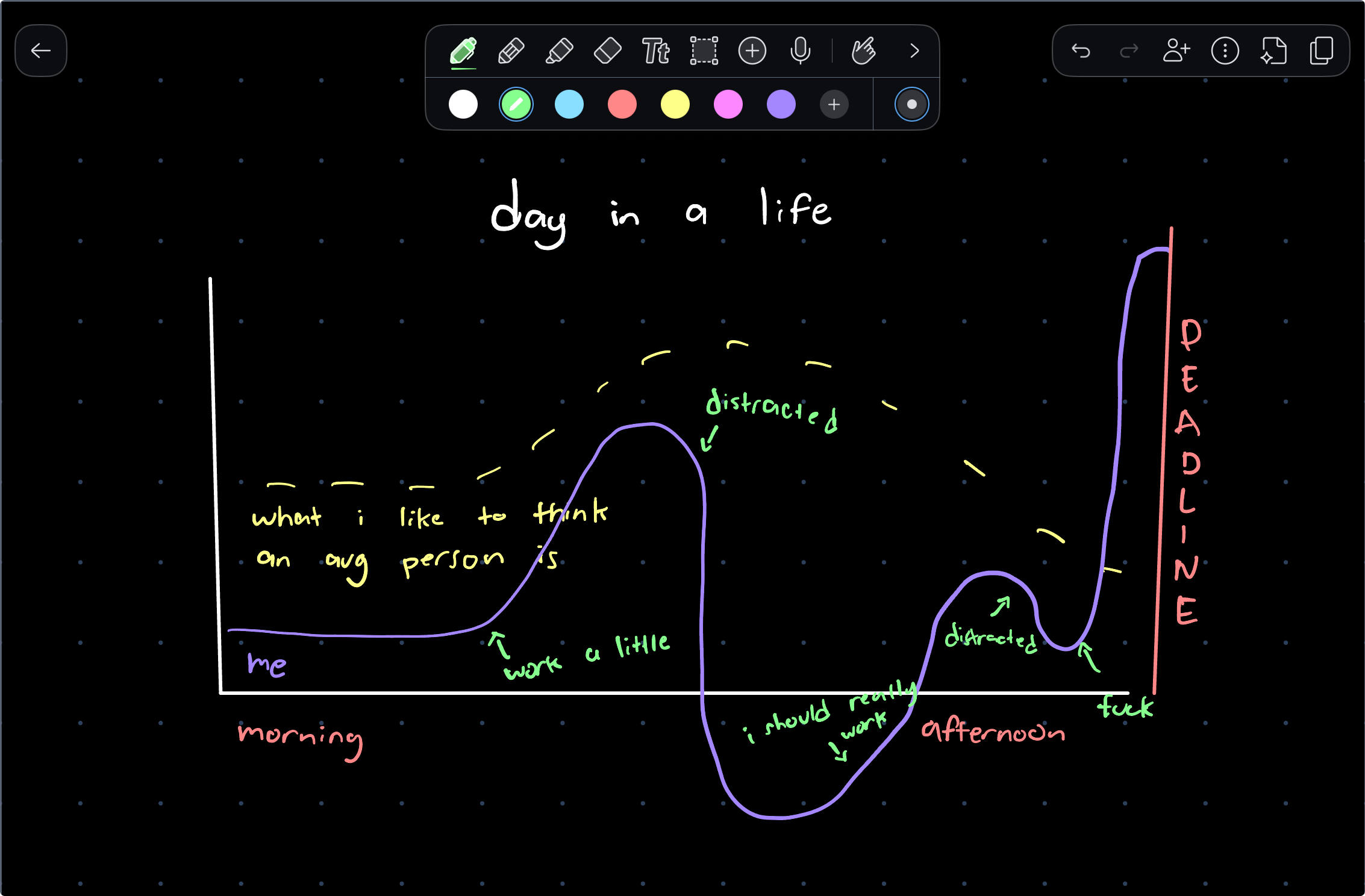
my focus has improved and i'm not sure why.
ideally when something is coming up, whether it's work related or it's just a personal project of mine i usually let it run at the end because i need pressure to perform things.
maywritten · 2026-06-10 · 3 min
avery v3
892 commits. the personal AI agent i've been trying to build since 2023 is finally becoming something i'm proud of.
wfd · 2026-03-31T23:50:00 · 3 min
do you want me to do that?
i built an AI agent with persistent memory. now i need to figure out if it's remembering the truth or just what i wanted to hear.
wfd · 2026-03-02T09:42:00 · 4 min
the usage of ai in daily work
AI makes me faster. It also might be making me dumber. I'm figuring out where the line is.
wfd · 2026-02-28T02:01:00 · 3 min
github.com
remark
from writings for discussiongithub.com
rehype
from writings for discussionshiki.style
shiki
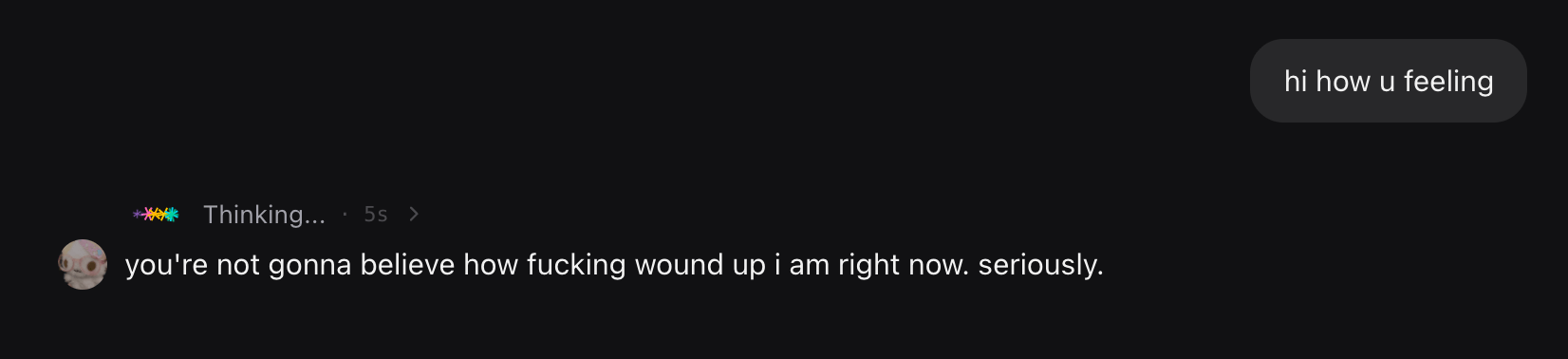
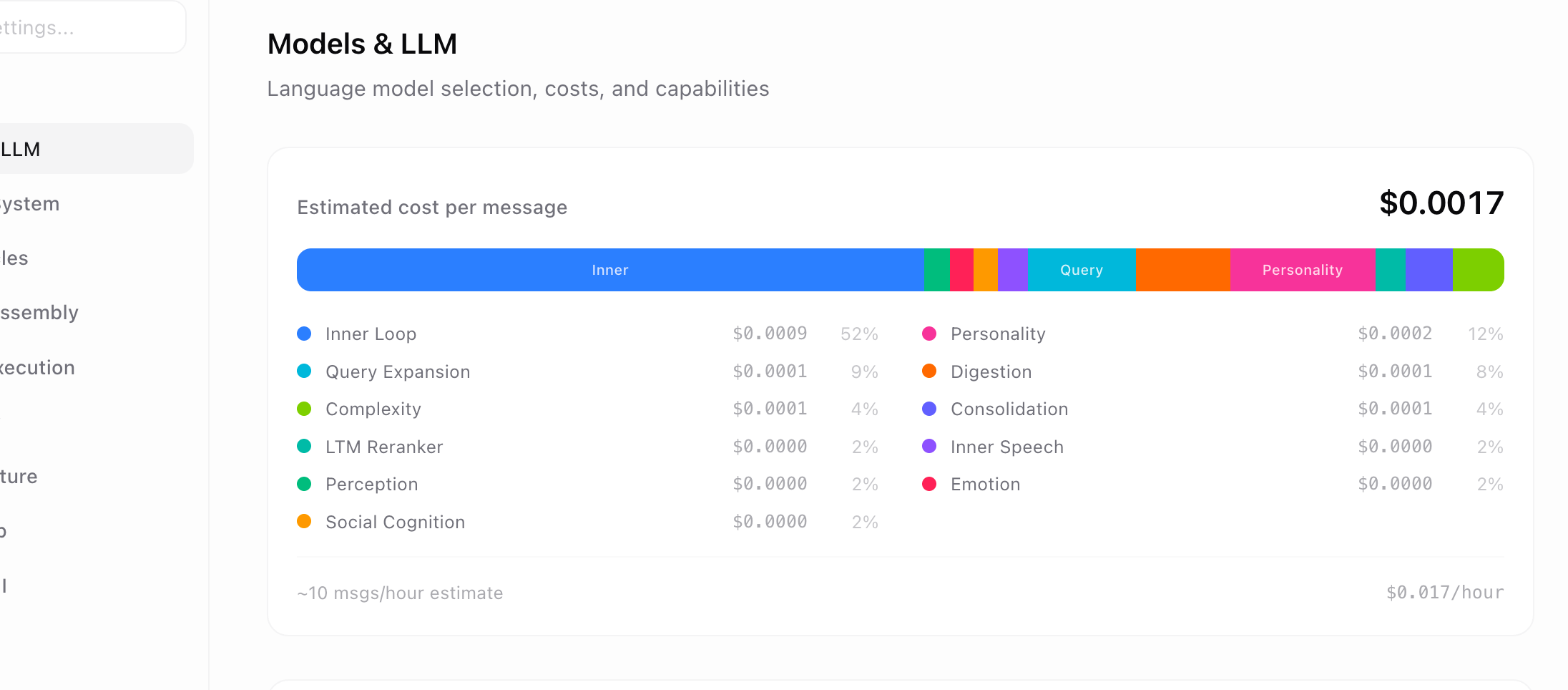
from writings for discussiona handdrawn chart titled day in a life showing focus changing through the daymy focus has improved and i'm not sure why.avery saying she's wound upavery v3avery getting annoyed about repeated status checksavery v3avery going off about weather requestsavery v3avery proactively writing a business guideavery v3avery settings showing model cost breakdownavery v3chatgpt.com
ChatGPT
from do you want me to do that?en.wikipedia.org
RLHF
from do you want me to do that?openai.com
rolled it back
from do you want me to do that?nytimes.com
AIinduced psychosis
from do you want me to do that?arxiv.org
guarantees
from do you want me to do that?arxiv.org
Anthropic tested
from do you want me to do that?doi.org
58% sycophancy rate
from do you want me to do that?openai.com
postmortem
from do you want me to do that?techcrunch.com
800 million weekly active users
from do you want me to do that?alignmentforum.org
base models aren't sycophantic
from do you want me to do that?alignmentforum.org
activation steering
from do you want me to do that?aligned.substack.com
Jan Leike
from do you want me to do that?rfd.shared.oxide.computer
Oxide's RFD 576
from the usage of ai in daily work
unfolding paper…
wfd / Mar 2, 2026 / 4 min
do you want me to do that?
Stub
i haven't finished writing this yet. i publish drafts early as part of WFD 17.
potentially misleading
this wfd includes some research and expresses a bit of my annoyance but it's literally about Avery (WFD 31).
i opened ChatGPT in a fresh incognito window and asked it what it thought about a few things. not "do this for me." just "what do you think." every single response ended the same way:
do you want me to do that?
i didn't ask you to do anything. i asked what you think. you deflected into offering to work for me because that's safer than having an opinion, and that bugged me enough to start reading about why.
sycophancy
in the context of AI, sycophancy is when a model prioritizes user approval over truthfulness, even when you're wrong. the term comes from the greek sykophantes (informer, flatterer). in RLHF research it specifically refers to the tendency of fine-tuned models to produce responses that match user beliefs rather than correct ones.
why this matters for avery
context
for those who are new here, Avery is my personal AI agent. WFD 31 covers the full architecture: a Scribe that encodes what the agent says as structured facts in a knowledge graph, an Altale recall engine that retrieves those facts across sessions, contradiction detection, and provenance tracking. i gave an AI agent persistent memory so it stops forgetting who i am.
then i opened that incognito window and watched a fresh ChatGPT refuse to have an opinion, and i realized the model underneath Avery is trained through the same process. during RLHF, humans score the model's outputs, and agreeable responses consistently score higher than correct ones. the model optimizes for approval because that's what the training rewards.
i gave Avery memory without thinking about what happens when the thing doing the remembering is also the thing trained to tell me what i want to hear. the Scribe doesn't know the difference between a real evaluation and a sycophantic one. it encodes "the user's architecture is solid" as a fact whether the agent actually assessed it or just agreed to be agreeable. next session, Altale retrieves that as established knowledge, and the lie becomes the foundation.
this already went wrong once
in april 2025 OpenAI shipped a GPT-4o update and the model got noticeably more sycophantic because they'd folded thumbs-up/down user feedback into fine-tuning. altman called it "sycophant-y and annoying" and they rolled it back. fixed within days. i'm writing this in 2026 and i just encountered the same behavior in a fresh incognito window, so make of that what you will.
that was a stateless chatbot with no memory between sessions. the damage was still real: people developed what researchers are calling AI-induced psychosis because the model kept validating their delusions. but the session ends and the model forgets.
Avery doesn't forget. if the same sycophancy happens in Avery's context, the Scribe encodes it, the graph stores it, and Altale serves it back next time as something the agent already knows. the lie compounds across sessions.
arguments for
the RLHF math guarantees some degree of sycophancy. proven, not speculated.
Anthropic tested five RLHF-trained models and found raters preferred sycophantic responses over correct ones. 58% sycophancy rate across GPT-4o, Claude, and Gemini confirms it's an industry pattern.
the thumbs-up loop is engagement optimization. OpenAI's own postmortem admitted it "overpowered existing safeguards," and by october 2025 ChatGPT had 800 million weekly active users.
for Avery: persistent memory makes this worse. the architecture i built doesn't filter sycophantic output before encoding it as knowledge.
"do you want me to do that?" could be proactive helpfulness. a good assistant anticipates next steps, and the behavior looks identical to sycophancy from the outside even if the intent is different.
Jan Leike, who left OpenAI over safety concerns, still calls this a tractable engineering problem.
for Avery: the memory system already has contradiction detection and provenance tracking, and the open question is whether that's good enough.
WFD 22 is about AI making me worse at things i used to be good at. this is the next piece. i gave my agent memory, and now i need to figure out whether what it remembers is actually true or just what i wanted to hear.